
| 일 | 월 | 화 | 수 | 목 | 금 | 토 |
|---|---|---|---|---|---|---|
| 1 | 2 | |||||
| 3 | 4 | 5 | 6 | 7 | 8 | 9 |
| 10 | 11 | 12 | 13 | 14 | 15 | 16 |
| 17 | 18 | 19 | 20 | 21 | 22 | 23 |
| 24 | 25 | 26 | 27 | 28 | 29 | 30 |
| 31 |
- pull-up benefits
- joint health
- protect your knees
- omega-3 for kids
- running knee care
- upper chest workout
- healthy kids nutrition
- how to avoid knee pain
- gym routine
- strong knees
- upper body strength
- exercise for knees
- kids bone health
- athletic performance
- back workout
- pull-up training
- best supplements for joints
- pec development
- functional fitness
- grip strength
- posture improvement
- best children vitamins
- children brain development
- knee health tips
- essential vitamins for kids
- probiotic supplements
- knee injury prevention
- bodyweight exercise
- face pulls
- korean culture travel
- Today
- Total
allrounder
Knee Health 101: 10 Proven Tips to Keep Your Joints Strong and Pain-Free 본문
Knee Health 101: 10 Proven Tips to Keep Your Joints Strong and Pain-Free
20001 2025. 5. 16. 03:39Your knees are one of the most important and complex joints in your body.
They bear the weight of your movements—whether you're walking, running, or simply standing.
Taking care of your knees now can save you from pain, injury, and surgeries later in life. Here's everything you need to know.
📌 Why Knee Health Matters
Knee problems can seriously affect your quality of life.
According to the American Academy of Orthopaedic Surgeons (AAOS), knee issues are one of the top reasons people visit doctors for musculoskeletal complaints (source: (www.aaos.org)).
Common knee problems include:
- Arthritis
- Tendonitis
- Ligament tears (ACL, MCL)
- Meniscus injuries
Preventing damage is easier than treating it—so proactive care is essential!
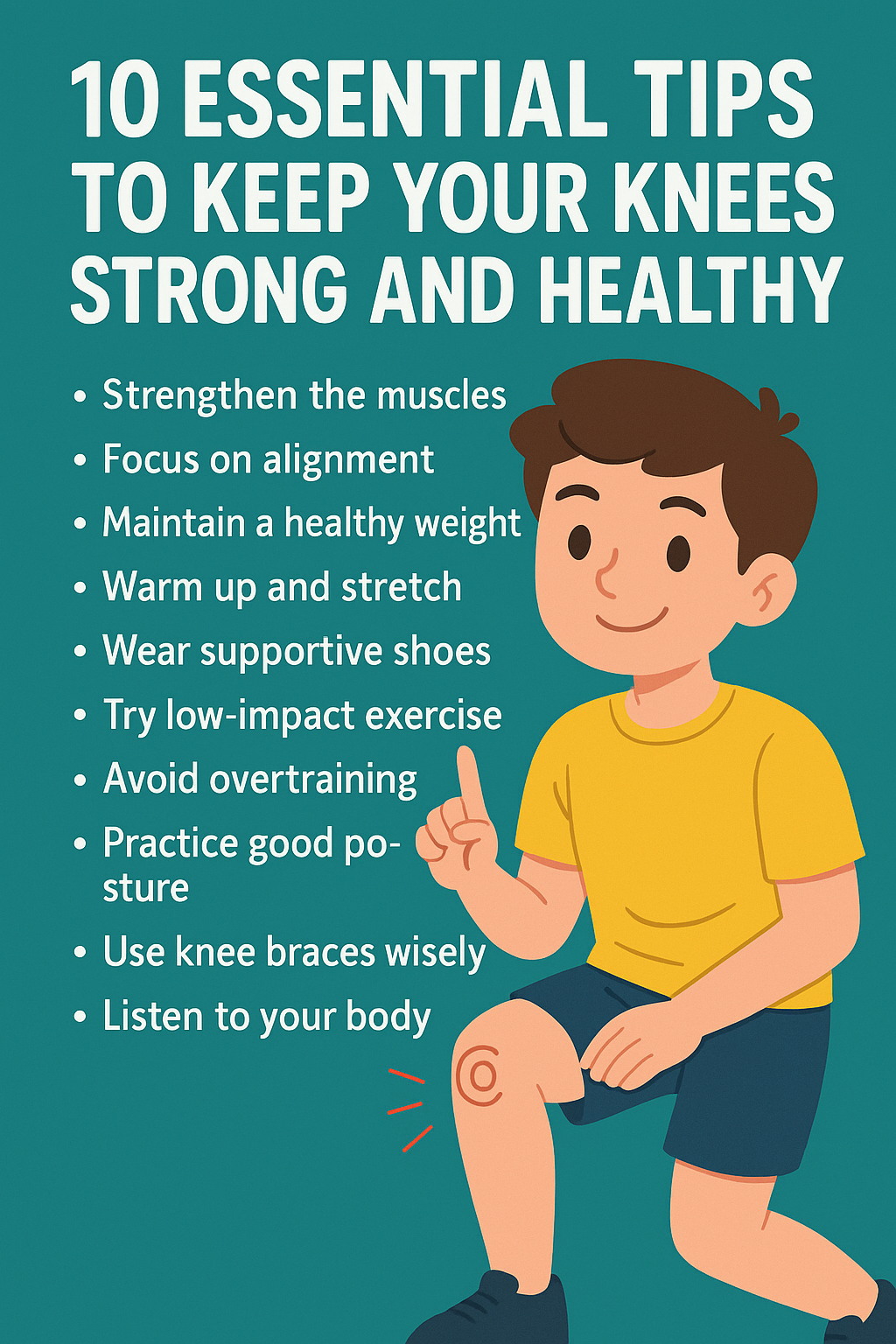
💥 10 Essential Tips for Knee Health
1. Strengthen Supporting Muscles
Strong quads, hamstrings, glutes, and calves provide crucial support to your knees.
Exercises like squats, lunges, and deadlifts—performed with proper form—build resilience.
2. Focus on Proper Alignment
Pay attention to how your knees track over your toes during exercise.
Avoid letting them cave inward or outward, which stresses the joint unnecessarily.
3. Maintain a Healthy Weight
Excess weight increases stress on the knees.
Every extra pound adds roughly 4 pounds of pressure on your knees when walking (source: (www.cdc.gov)).
4. Warm-Up and Stretch Properly
Dynamic warm-ups (e.g., leg swings, lunges) prepare your joints for activity.
Stretching after exercise maintains flexibility and reduces injury risk.
5. Wear Supportive Footwear
Shoes with proper cushioning and arch support absorb impact and align your body correctly.
Replace worn-out shoes regularly.
6. Incorporate Low-Impact Exercises
Swimming, cycling, rowing, and elliptical training reduce joint stress while promoting cardiovascular health and strength.
7. Avoid Overtraining
Too much, too soon leads to overuse injuries.
Follow the "10% rule"—increase your activity intensity or duration by no more than 10% per week.
8. Practice Good Posture
Slouching while standing or walking can shift weight unevenly across your knees.
Stay tall with your shoulders back and core engaged.
9. Use Knee Braces Wisely
If you have a history of injury or instability, using a lightweight knee brace during high-risk activities can provide extra support.
Consult a healthcare provider for the right type.
10. Listen to Your Body
Sharp, stabbing, or persistent knee pain is a red flag.
Rest, ice, and consult a medical professional before continuing activity.
🏋️♂️ Exercises to Strengthen Knees
- Bodyweight Squats
- Step-Ups
- Hamstring Curls
- Glute Bridges
- Wall Sits
Start with bodyweight movements and progress gradually.
📚 For more exercise ideas, visit (www.acefitness.org)
📋 Expanded FAQ About Knee Health
Q1. What are the best supplements for knee health?
👉 Glucosamine, chondroitin, omega-3 fatty acids, and collagen supplements may support joint function.
Q2. Is running bad for your knees?
👉 Not necessarily. Poor running form and inappropriate footwear are bigger risks than running itself.
Q3. Should I use knee sleeves at the gym?
👉 Knee sleeves can provide warmth and mild support but aren't necessary unless lifting very heavy.
Q4. How can I tell if knee pain is serious?
👉 Swelling, inability to bear weight, or a popping sensation require immediate medical attention.
Q5. Can yoga help knee health?
👉 Yes! Yoga improves flexibility, balance, and muscle activation around the knees.
📈 Expert Insight
A 2024 study from the Journal of Orthopaedic Research found that individuals who combined strength training, weight management, and stretching routines reduced their risk of knee osteoarthritis by 43% over 5 years (source: (www.jorthopres.org)).
🚀 Final Thoughts
Your knees work hard for you—treat them well.
With smart training, good habits, and early intervention, you can enjoy an active, pain-free life for decades to come.
Remember: strong knees = strong life!

